Urban Acres Food Hub
Located In: Forsyth County
Counties Served: Forsyth, Montgomery, Guilford, Davidson, Randolph
Overview
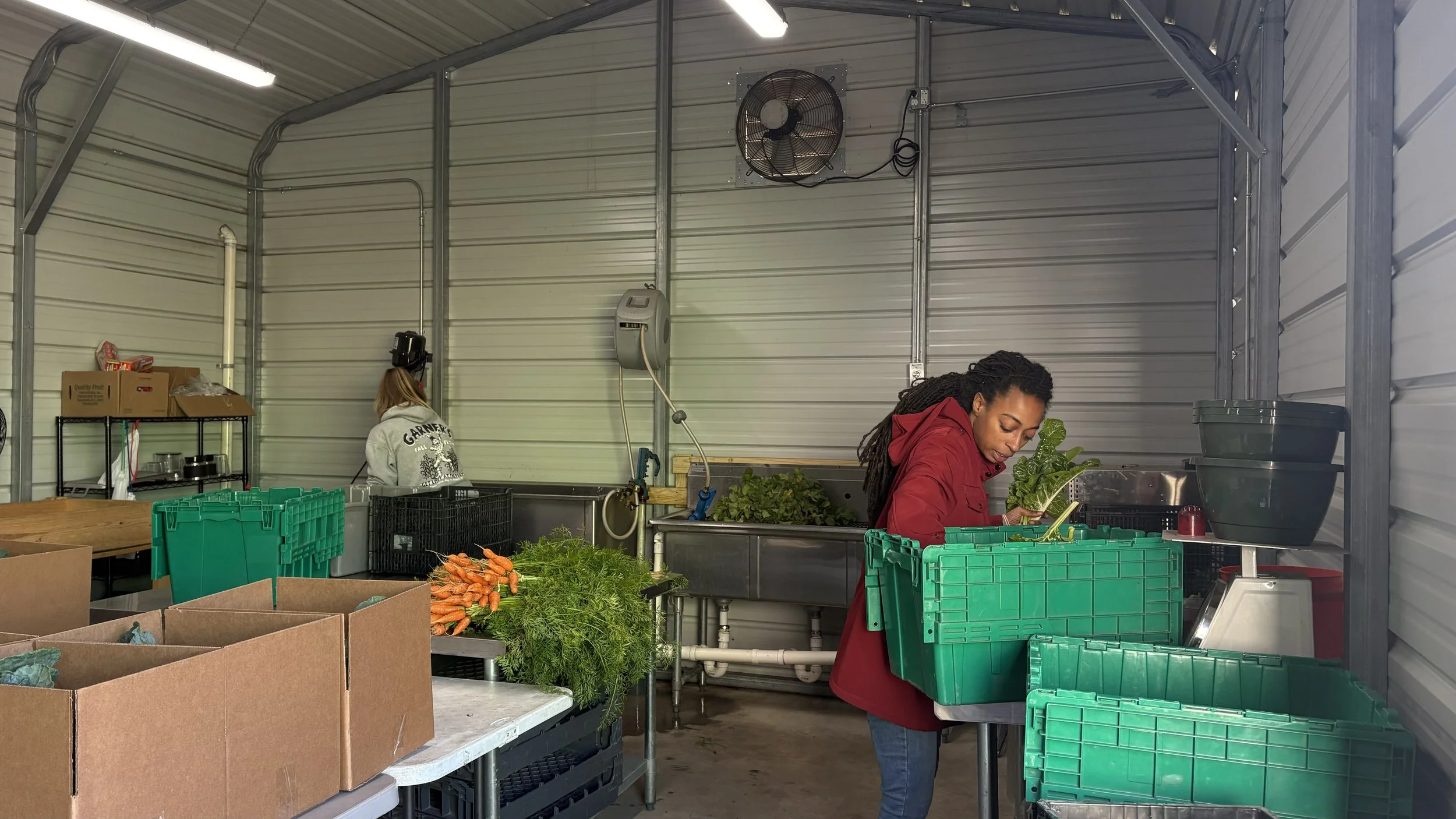
A project of Growing High Point, the Urban Acres Food Hub is the heart of out local food supply chain. As a shared processing and distribution center, it provides community gardeners and urban farmers with the infrastructure they need to wash, package, and store fresh produce. Whether we are aggregating crops from local farmers, processing our own harvests, or accepting community donations, the Hub ensures that fresh, healthy food is prepped and ready for our Farmer's Market, the Growdega, and other local outlets.
Major Programs


Community Fresh Food Access
Farm Share Program: this weekly program provides free bags of fresh produce to 40 low-income senior households in High Point.
Farm Fresh Nourish: Growing High Point Food Hub participates in Second Harvest Food Bank's Farm Fresh Nourish Program, packing 65 boxes of produce weekly for 2 food pantries during the spring and summer months.
Accessible Pricing: All produce sold on Growdega is sold at 30% off the farmer's market price in an effort to make fresh produce more affordable and accessible to residents living in food deserts in High Point.
Community Partnerships: We have partnered with the Food Security Team at Guilford County Cooperative Extension to provide produce for holiday meal giveaways and free holiday markets for families. Growing High Point also participates in seasonal Triad Black Farmer's Markets orchestrated by the Triad Black Faith Leaders & Black Farmers Network.
Farmer Capacity
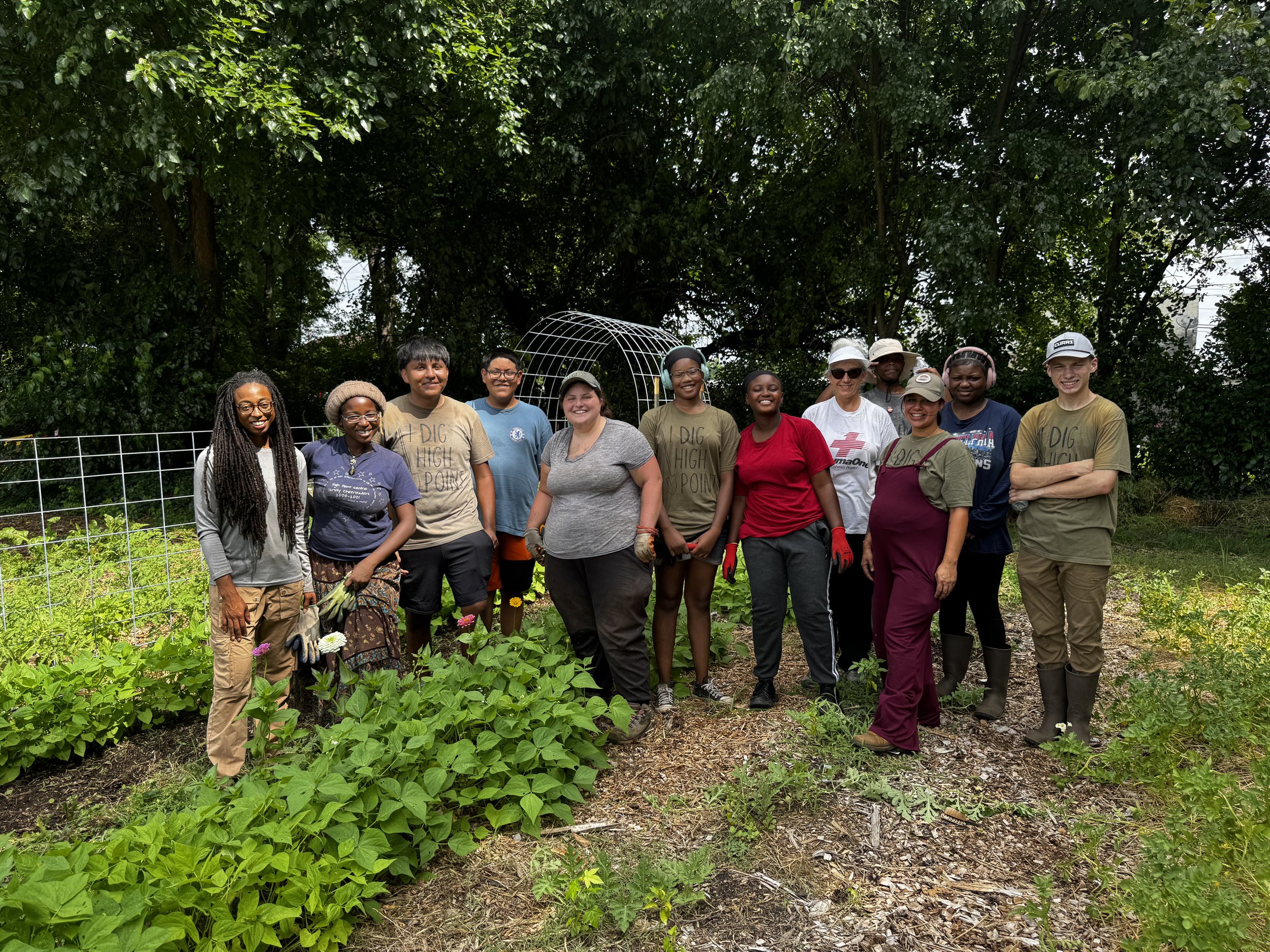
FarmHer Program: Growing High Point's FarmHer Program is designed for women who have an interest in gaining agricultural skills while providing for their families. Program participants help cultivate Growing High Point’s Urban Acres while learning everything from "seed to sale" from our knowledgeable Farm Staff. Additional benefits include Cooperative Extension workshops, food handler safety trainings, and a free weekly CSA box.
Facility Availability: The Food Hub is available to all our community gardeners and urban farmers to wash, dry, package and store fresh produce.

Local Food Promotion
Farmers Market Vouchers: At the High Point Farmer's Market, we participate in the Double-Up Bucks program for SNAP customers, we take WIC cards, and participate in a Senior Voucher Program.
Local Recipes: In 2025, GHP collaborated with the High Point community and Elon University to create a community cookbook which is available for free distribution on Growdega. GHP's CSA program also includes a recipe database of curated, plant-forward recipes to compliment the box contents.

Food Is Medicine
Produce Prescription Vouchers: The Community Clinic of High Point sponsors $5 Growdega vouchers for all patients picking up a medical prescription every Wednesday. Growing High Point also partners with Healthy Blue NC, a program for Medicaid members through BCBS of NC, to provide sponsored Growdega vouchers or produce boxes for Flu Clinic events.
In addition, several of GHP's Growdega stops operate in support of Food is Medicine values, including weekly stops at the Community Clinic of High Point and the Hayworth Cancer Center.
Direct Sales
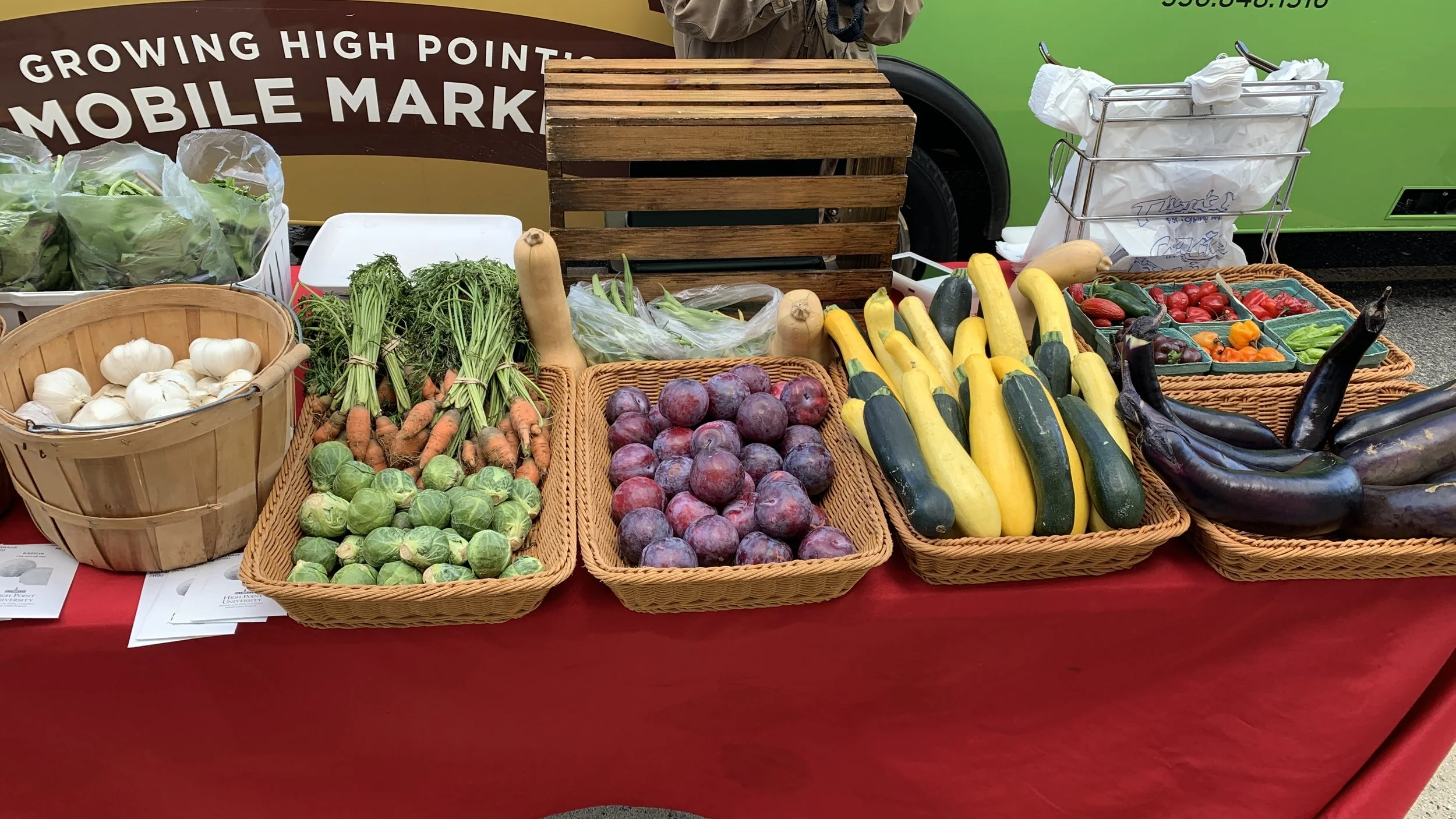
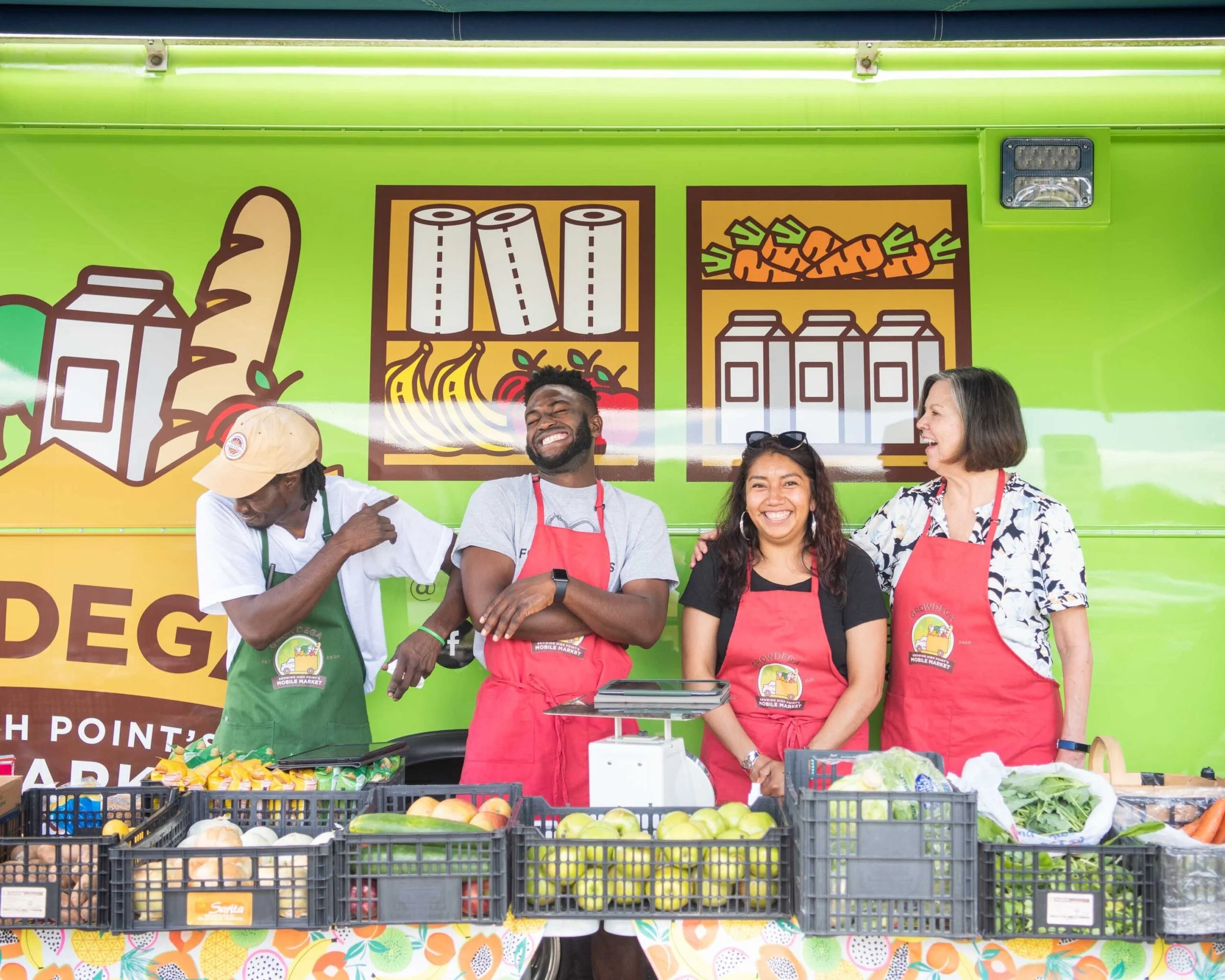
Growdega Mobile Market: our Growdega is a mobile grocery store designed to increase access to fresh, healthy food in areas with limited options. It brings fruits, vegetables, and essential items directly into neighborhoods that lack traditional grocery stores, reducing transportation barriers and improving food availability. The model expands choice while supporting residents who use SNAP or EBT, including a “double your dollars” benefit that stretches food budgets and encourages the purchase of nutritious items.
Farm Share CSA: Growing High Point sells directly to consumers through our CSA Program, which provides weekly boxes of locally grown produce, creating a steady outlet for local farmers. The model supports more efficient, sustainable production by giving growers predictable demand and a direct connection to the community. Subscriptions help farmers plan, increase income stability, and share the realities of seasonal agriculture while residents gain access to fresh, seasonal food.